The smoothie and juice bar industry has never had more going for it. Consumer demand for better-for-you food options continues to grow. New medications are reshaping how millions of Americans think about what they eat. And operational models like Robeks Juice are proving that food-service ownership doesn’t require a kitchen full of line cooks or a 3,000-square-foot build-out.
For prospective franchise owners paying attention to category growth, the data is hard to ignore.
The Smoothie Market: Where It Stands and Where It’s Heading
The global smoothie market was valued at approximately $13.5 billion in 2024 and is projected to reach $23.1 billion by 2030, representing a compound annual growth rate of around 9.3%. That’s a sign of a category with real, sustained commercial momentum.
Juice bars and smoothie concepts are among the fastest-growing segments within the quick-service restaurant space. Smaller footprints, lower labor requirements, and high repeat-visit rates make these models attractive to both operators and investors.
Robeks Juice has been a key player in the health and wellness market since 1996, long before “better-for-you” became a standard menu category. That longevity matters for franchisees: you’re not betting on a concept that still needs to prove itself, but joining a brand that helped define the category.
The GLP-1 Effect: A Structural Shift in How Americans Eat
One of the most significant demand drivers in 2026 didn’t exist at scale five years ago. GLP-1 medications like Ozempic and Wegovy, originally developed to treat type 2 diabetes, have been widely adopted as weight-loss treatments. By 2025, an estimated 15 million Americans were using GLP-1 agonists, and this figure continues to grow as more formulations reach the market and insurance coverage expands.
The impact on the QSR industry has been real and measurable. GLP-1 users are consuming fewer calories overall, gravitating toward nutrient-dense foods, and becoming more intentional about what they eat. They’re eating less, but choosing more carefully.
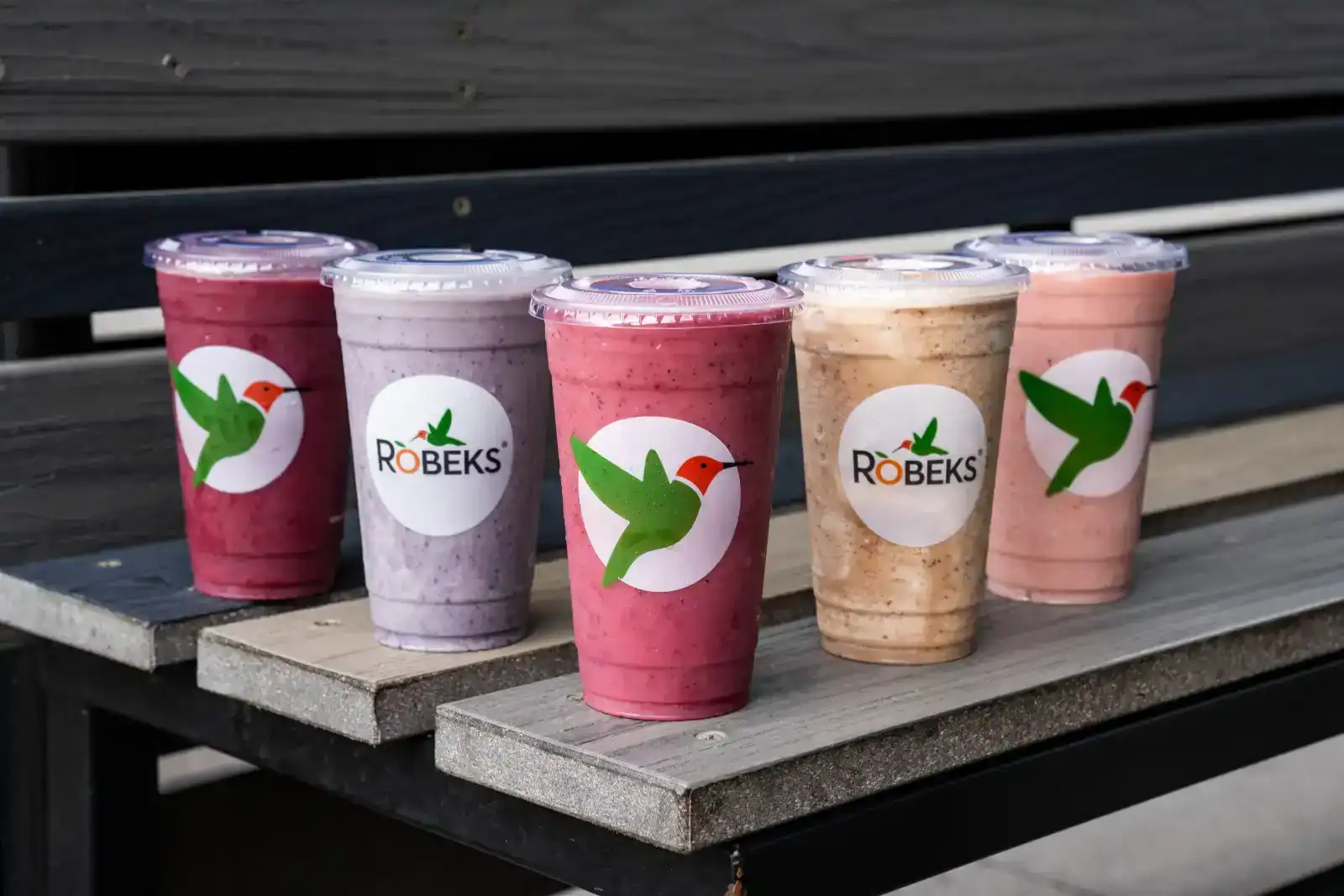
A Robeks Juice smoothie made with real fruit and no artificial ingredients fits exactly the profile of what GLP-1 users and health-conscious consumers in general are gravitating toward: high nutritional value, manageable portion sizes, and ingredient transparency.
This consumer trend is already showing up in sales patterns at health-forward food concepts, and it’s one that franchisees entering the smoothie and juice bar category are positioned to benefit from for years.
The Wellness Trend Continues to Grow
The wellness category Robeks Juice helped define has grown substantially in consumer importance over the past decade. The Global Wellness Institute valued the global wellness economy at over $6.3 trillion in 2023, with nutrition and healthy eating representing one of the largest sub-segments. Consumers are reading ingredient labels, questioning artificial additives, and actively seeking out food that serves their health goals.
Robeks Juice’s better-for-you product positioning isn’t a marketing gimmick. It’s been the operating philosophy since 1996.
Why Low-Overhead, Chefless Models Are Winning
Market demand tells you whether a category is worth entering. Operations tell you whether you can run it profitably once you’re in.
Labor costs, commercial real estate pressure, and supply chain complexity have made full-service restaurant franchising increasingly challenging for first-time owners. Concepts that require large kitchen footprints, skilled culinary staff, and complex prep operations are harder to staff, more expensive to build out, and more operationally intensive to run.
Robeks Juice operates without the need for line cooks, extensive culinary training, or back-of-house complexities. The prep process is standardized and repeatable, and self-service kiosks and digital ordering platforms have further reduced front-of-house labor pressure.
This operational simplicity makes Robeks Juice a compelling multi-unit opportunity. When your systems are clean and your labor model is lean, the path from one location to two or three is much clearer than it is in a complex kitchen-driven concept.
What Market Trends Mean for Robeks Juice Franchise Owners
Robeks Juice’s top 25% of franchisees reported average unit volumes of greater than $1M in 2025.* That performance is supported by a franchise system built by people who have been operators themselves.
Three of the brand’s four senior executives were multi-unit franchisees before joining the corporate team. When you call with a question, you’re talking to someone who has been where you are.
The brand has also operated without private equity ownership, corporate debt, or an exit agenda. That stability means the decisions being made about the franchise system are made with the long-term health of the network in mind, not a near-term liquidity event.
Get a Taste of the Growing Juice & Smoothie Market
It’s rare that a category can claim strong consumer demand, low operational complexity, and proven brand execution. The smoothie and juice bar market has all three, and Robeks Juice is one of the only brands with 30 years of proven success to back it up.
If you’ve been evaluating franchise opportunities in the health and wellness QSR space, there’s never been a better time to start the conversation. Connect with our franchise development team to learn about available territories and take the next step.